
What temperature should a commercial fridge be? (AU food-safety guide)
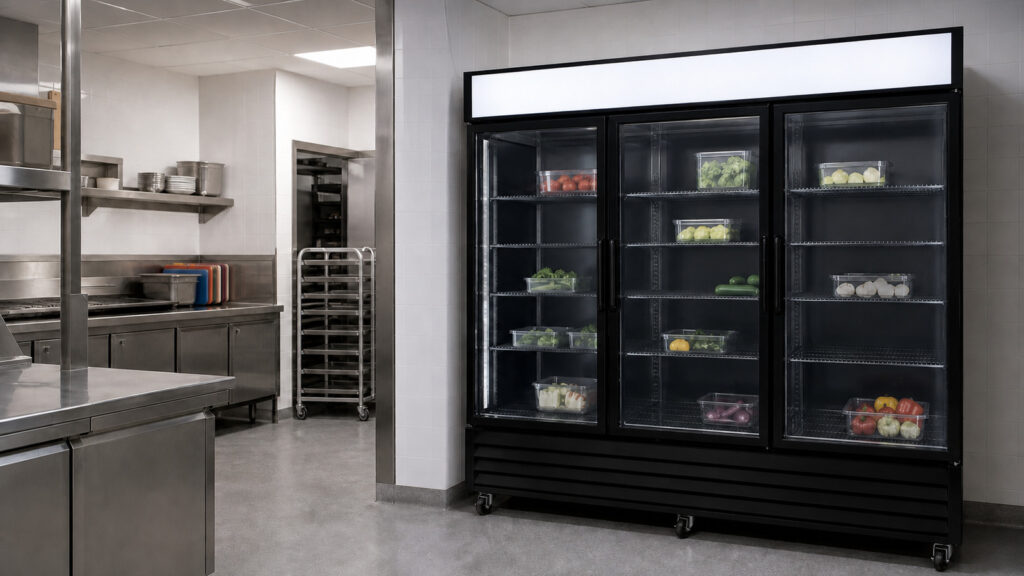
Keep cold food at 5°C or below; the food-safety danger zone is 5°C to 60°C (NSW Food Authority / FSANZ). Freezers run frozen, typically around −18°C as industry practice. Log temperatures, and if a unit can’t hold the band, treat it as a fault — book restaurant and café refrigeration servicing before it costs you stock or a council audit.
If you run a restaurant, café, pub, supermarket or any food business in NSW, holding the right refrigeration temperature isn’t just good practice — it’s a legal food-safety obligation. The good news is that the targets are simple and well-defined. The part that trips most kitchens up is proving it, and acting fast when a unit drifts.
1. The numbers: fridge, freezer and the danger zone
Australia’s food-safety figures come from the NSW Food Authority and Food Standards Australia New Zealand (FSANZ):
- Cold food: 5°C or below. Potentially hazardous food must be kept at or under 5°C in your fridges, cool rooms and display cabinets.
- The danger zone: 5°C to 60°C. Between these temperatures, bacteria multiply fastest. Food held in this range for too long becomes unsafe — which is why anything reading above 5°C needs attention quickly.
- Hot food: 60°C or above. The other safe side of the zone, for hot-holding.
- Freezers: around −18°C. Frozen storage isn’t a single legislated number, but −18°C is standard industry practice and keeps food frozen hard.
2. Measure the food, not the air
A common mistake is trusting the digital readout on the front of the cabinet. That display shows air temperature at the sensor — which can read fine while product in a warm spot, or freshly-loaded stock, sits above 5°C. Use a calibrated probe thermometer and check the temperature of the food, in the warmest part of the cabinet (usually near the door or top shelf). For packaged product, slide the probe between two packs rather than piercing them.
3. HACCP logging: what auditors look for
Under a food-safety program, you’re expected to monitor and record temperatures, not just hit them. An inspector or HACCP audit wants to see:
- Regular temperature checks (commonly at least daily) of each fridge, cool room and freezer.
- Records kept and dated — paper log or digital data-logger both work, as long as it’s consistent.
- A clear corrective action when a reading is out of range (what you did, and when).
- Calibrated measuring equipment.
Data-loggers make this far easier and remove the “we forgot to write it down” gap — and they give you an early warning before a fridge fully fails. We can advise on monitoring as part of a planned refrigeration maintenance plan, and verify temperatures at every service so you have a documented check.
4. What to do during a temperature excursion
If a fridge climbs above 5°C, the clock starts. The “2-hour / 4-hour rule” is the practical guide many businesses use: food in the danger zone for under 2 hours can be refrigerated again; 2–4 hours, use it immediately; over 4 hours, throw it out. But don’t treat repeated excursions as normal — a unit that keeps drifting has a fault (a choked condenser, a failing defrost, low gas) and needs a technician, not just a re-log. Standing above-temperature food is a write-off you want to avoid, not manage.
5. Keeping equipment in the band
Most temperature failures are preventable. Keep condenser coils clean, replace perished door seals, don’t overfill cabinets or block internal vents, and don’t jam fridges next to ovens or grills where they can’t reject heat. Above all, service the equipment regularly — a unit that’s checked twice a year rarely surprises you with an excursion mid-service. For food businesses specifically, that’s the core of how we keep restaurant and café cold chain compliant and reliable across Sydney.
The 5°C cold limit, the 5°C–60°C danger zone and the 60°C hot limit are from the NSW Food Authority and FSANZ. The −18°C freezer figure is standard industry practice, not a single legislated number. Always check your specific food-safety program for your business type.
That’s a fault, not a maintenance note — talk to a licensed tech.
Frequently asked questions
What temperature should a commercial fridge be in Australia?
Cold food must be kept at 5°C or below in NSW, and the 5°C–60°C range is the food-safety danger zone where bacteria multiply fastest (NSW Food Authority / FSANZ). Anything reading above 5°C needs attention quickly.
What temperature should a commercial freezer run at?
Commercial freezers are run frozen — typically around −18°C, which is standard industry practice rather than a single legislated number. Active checks and logs temperatures on every service so your equipment stays within range.
How often should I check and record fridge temperatures?
Most food-safety programs expect at least daily checks of each fridge, cool room and freezer, recorded and dated. A data-logger makes this automatic and gives early warning before a unit fully fails — we can advise on monitoring as part of a maintenance plan.
What should I do if my fridge goes above 5°C?
Act on the food first using the 2-hour/4-hour rule, record the corrective action, then treat the unit as faulty — repeated excursions mean a real fault like a dirty condenser, failing defrost or low gas. Call a licensed technician rather than just re-logging.